Collect
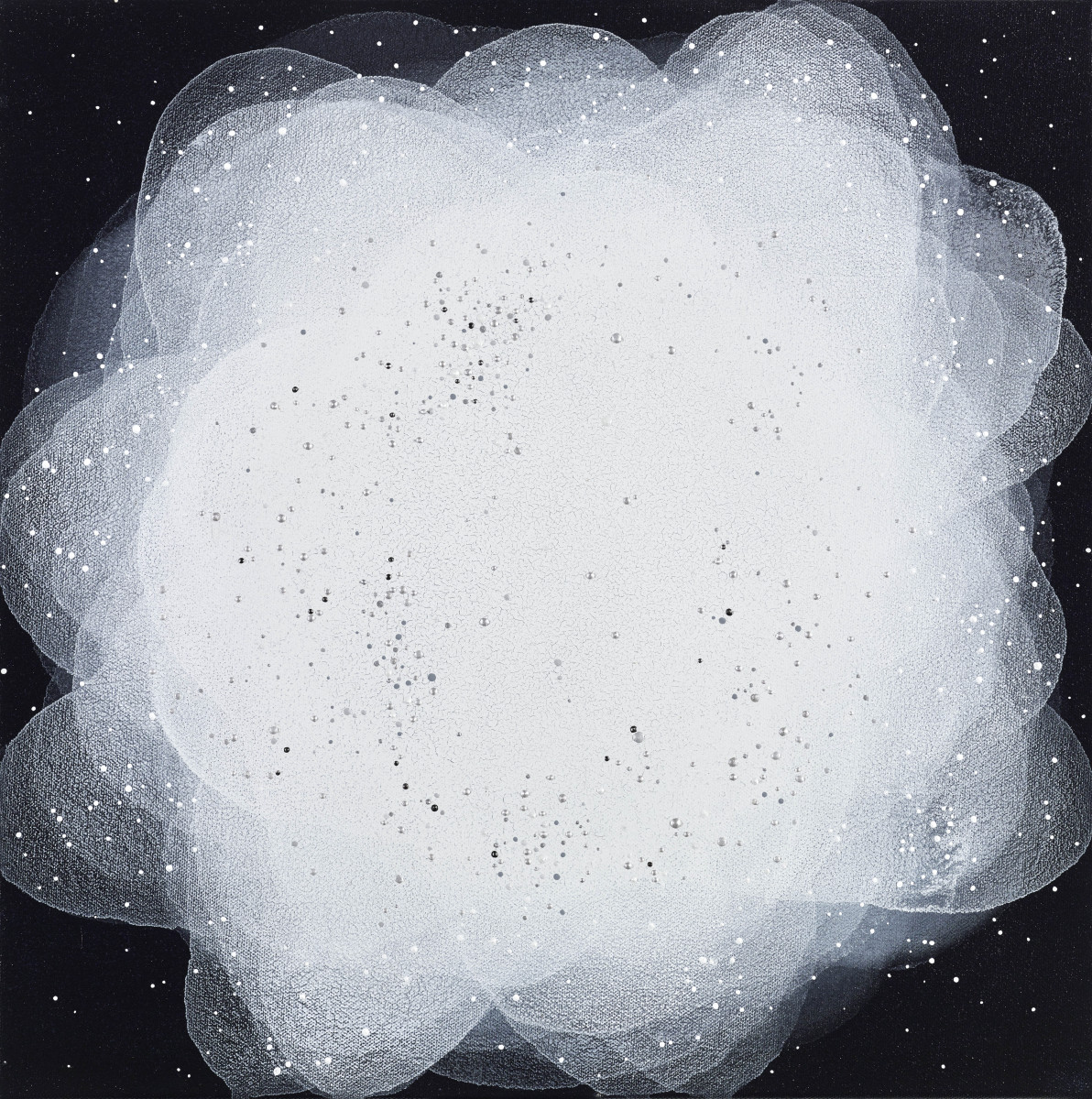
Spring - Sikkoku
Acrylic painting
Size 40x40cm
NTD 31,500 (USD 985.52) (After Tax)
Certificate
M2022APG000068PA
此資產證號(M2022APG000068PA)為登錄憑證;著作權或授權內容以另行標示為準。

Edition Number
30 / 30
Artist
NORI
Creation Year
2024
Condition Status
Well
Supplier
POST WINGS
Introduction
Noriki Muraki's "Island Charm - Shinsan Red" reinterprets mountainous landscapes from a unique perspective. The work uses the stitching of color blocks and delicate lines, allowing natural scenery to drift between abstraction and representation, presenting a distinctive geomorphic poetics. The contours of the mountains are clearly visible, but their internal structure is deconstructed into vividly colored segments, enabling viewers to visually recognize the mountains while also sensing a certain artificial handling of the landscape. This approach to imagery evokes the etching techniques of Rembrandt, which create layers through lines and light, but in Muraki's work, this sense of layering is replaced by color, forming a flatter visual vocabulary.
In terms of color, the title "Shinsan Red" is derived from a dyeing technique from the Edo period, with a strong red serving as the tonal foundation of the piece. The red gradienting from the mountain ridge into the sky forms a powerful symbolic meaning. This recalls the minimalist and exaggerated use of color found in Katsushika Hokusai's "Thirty-Six Views of Mount Fuji." Muraki perpetuates this depiction of natural landscapes in a modern way, imbuing it with a fresh abstract dimension.
This painting not only captures the shape of mountains but also seems to explore the relationship between landscape, culture, and human intervention. Through a map-like structured language, Muraki’s creation allows viewers to rethink the distance between nature and ourselves.
In terms of color, the title "Shinsan Red" is derived from a dyeing technique from the Edo period, with a strong red serving as the tonal foundation of the piece. The red gradienting from the mountain ridge into the sky forms a powerful symbolic meaning. This recalls the minimalist and exaggerated use of color found in Katsushika Hokusai's "Thirty-Six Views of Mount Fuji." Muraki perpetuates this depiction of natural landscapes in a modern way, imbuing it with a fresh abstract dimension.
This painting not only captures the shape of mountains but also seems to explore the relationship between landscape, culture, and human intervention. Through a map-like structured language, Muraki’s creation allows viewers to rethink the distance between nature and ourselves.
Video Intro
None
Exhibition Resume